
Antenna Test Systems
Far Field System
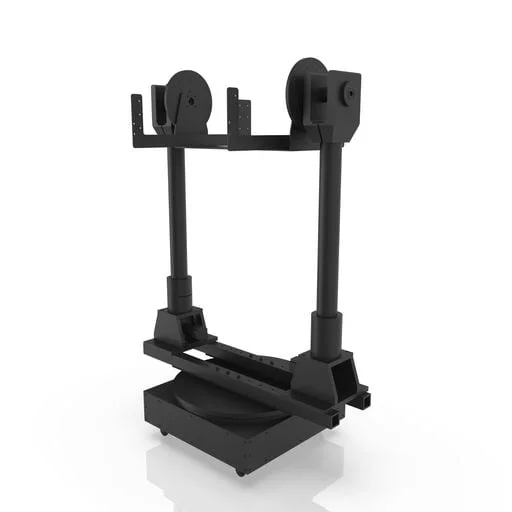
5G FR1 Sub 6GHz over-the-Air (OTA) Test
- Frequency Range: DC to Sub 6 GHz (extendable up to 110GHz)
- Positioning Accuracy: 0.02°
- Payload Capacity : 50 lbs- 2000 lbs
- DUT Test Size: 10cm to 3mtr
- Elevation : ±180°
- Azimuth : 360° continuous
- Roll : 360°
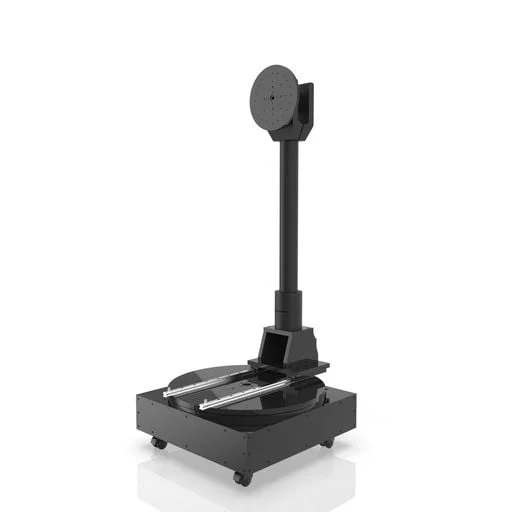
5G FR2 mmWave over-the-Air (OTA) Test
- Frequency Range: DC to 40GHz (Extendable up to 110 GHz)
- Positioning Accuracy: 0.02°
- Payload Capacity : 50 lbs- 2000 lbs
- DUT Test Size: 10cm to 3mtr
- Elevation : ±180°
- Azimuth : 360° continuous
- Roll : 360°
Near Field System
DMC offers premium quality high performance Expanded Polypropylene (EPP) absorbers made of the molding process and the State-of-the-art carbon synthesis process ensures extremely high uniformity of carbon powder density throughout the absorber.
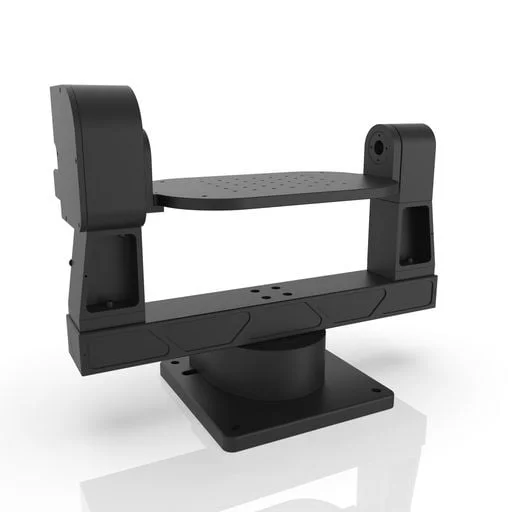
Spherical Near Field System:
DMC team of experts are specialized in providing hardware and software for measuring Antennas in Near field region. For testing small cells or Massive MIMO Base station antennas beam steering our software seamlessly measures and plots almost all of Antenna parameters being described in 3GPP standards.
- Frequency Range: DC to 110 GHz
- Positioning Accuracy: 0.02°
- Payload Capacity : 50 lbs- 2000 lbs
- DUT Test Size: 10cm to 3mtr
- Elevation : ±180°
- Azimuth : 360° continuous
- Roll : 360°
Compact Antenna Test Range
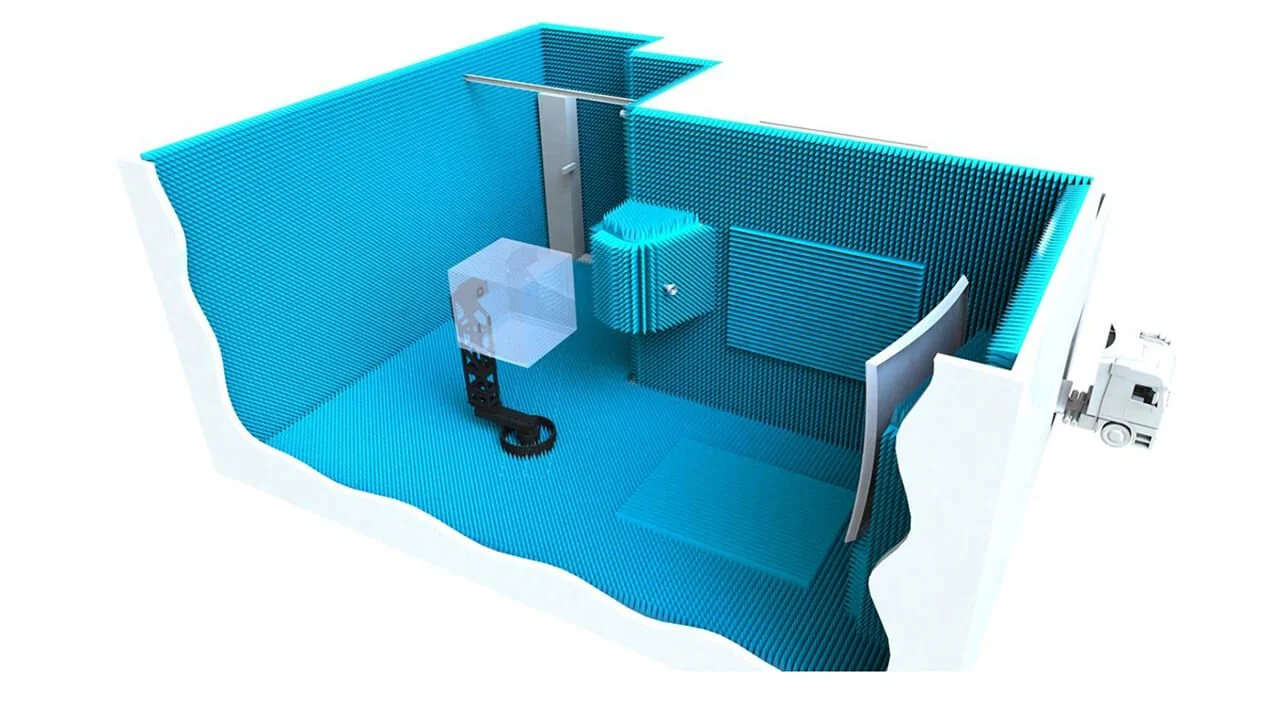
Rolled Edge Reflector:
DMC can offer a wide range of Rolled Edge CATR reflectors ranging from 30cmx30cm to maximum size of 3.6х3.6 meters with quiet zone of 1.8 meters.
Our Reflectors are made of more than 250 mm thickness milled Aluminum panels. Our Reflector frame is also made of Aluminum, which provides thermal symmetry of the construction. The design does not suggest any adjustment elements for segment connection, which substantially lowers requirements for reflector maintenance. All elements are milled on precision 5-axis machine with 15 µm/m precision, which provides the highest quality of the working surface.
6 Axis Robotic Antenna measurement system
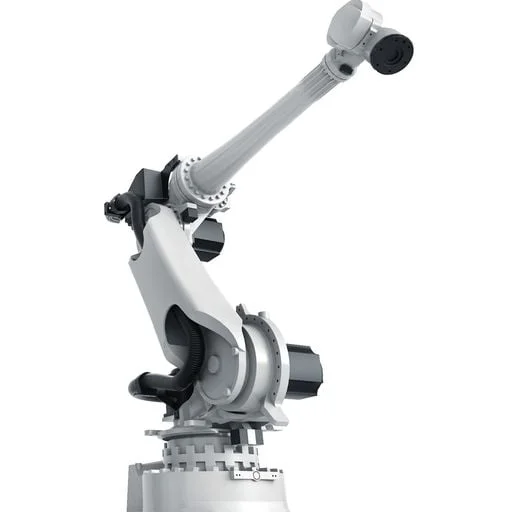
6 Axis Robotic Antenna measurement system
- Frequency Range: DC to 110 GHz
- Maximum Arc length : 2.5mtr
- Positioning repeatability: ±0.05 (mm)²
- Payload Capacity : 50 lbs- 10,000 lbs
- DUT Test Size: 10cm – 2.5mtr
- Drive motor: AC Servo motor
- Speed of operation : Upto 887°/sec
Frequently Asked Questions
An antenna test system is used to measure and evaluate antenna performance, including radiation patterns, gain, directivity, polarization, and other important RF parameters.
The main types of antenna test systems include Near Field Systems, Far Field Systems, and Compact Antenna Test Ranges (CATR).
A near field antenna test system measures an antenna’s electromagnetic field close to the device under test. The measured data can be processed to determine antenna performance characteristics.
A far field antenna test system measures antenna performance at a sufficient distance from the antenna, making it suitable for evaluating radiation patterns and over-the-air performance.
Near field testing is performed close to the antenna and uses measured field data for further analysis, while far field testing is conducted at a greater distance where the antenna’s radiation characteristics can be directly evaluated.
A Compact Antenna Test Range uses a precision reflector to create a controlled testing environment that simulates far-field conditions within a compact indoor space.
Depending on the system configuration, antenna test systems can measure parameters such as radiation patterns, gain, directivity, polarization, beam characteristics, and positioning performance.
The supported frequency range depends on the system configuration. DMC’s antenna test solutions include systems operating from DC to Sub-6 GHz, 40 GHz, and up to 110 GHz in certain configurations.
The right system depends on factors such as antenna size, operating frequency, measurement requirements, available test space, positioning accuracy, and required test parameters.
Yes, antenna test systems can be configured based on specific requirements, including frequency range, DUT size, payload capacity, positioning system, and antenna measurement requirements.