
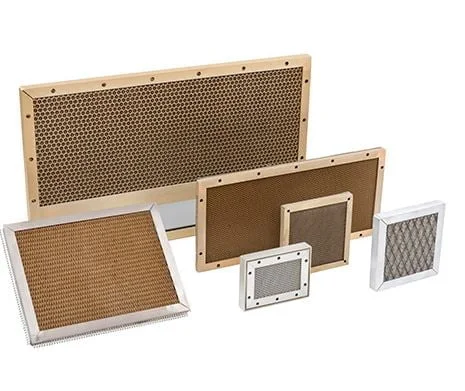
EMI Brass Honeycomb Vent

EMI Brass Honeycomb Vent

DMC-HMB series honeycomb vent is widely used in EMC shielding field, for the air refresh system of the RF shielding room, microwave chamber or RF shielding box. The available materials include Aluminum, tin steel, brass and copper. The choice of the honeycomb vent with the best design is based on the RF shielding performance and air flow.

Available Cell diameter

3.2mm, 3.2mm, 4.8mm, 5.2mm, 8mm,

Available Thickness

12.5mm, 25mm, 50mm

Specifications

Frequency Band

Attenuation

100KHz >100dB
1MHz – 10MHz >100dB
10MHz – 30MHz >100dB
30MHz – 1GHz >100dB
1GHz – 10GHz >100dB

All above is the common size RF shielding door, it’s available to design and produce the special size door as customer’s requirement


**All above is the common cell diameter, for special size cell diameter no in list, customer would pay for the cost for the DIE of new size cell diameter. **All above is the common thickness size, It’s available to modify the thickness size as customer’s requirement.

Frequently Asked Questions

An EMI brass honeycomb vent is a shielding ventilation component designed to allow airflow while helping maintain electromagnetic shielding performance in RF shielded environments.

EMI brass honeycomb vents are commonly used in air-refresh systems for RF shielding rooms, microwave chambers, and RF shielding boxes.

The honeycomb structure acts as a waveguide below cutoff, allowing air to pass through while attenuating unwanted electromagnetic signals.

Available cell diameters include 3.2 mm, 4.8 mm, 5.2 mm, and 8 mm. Special cell sizes can also be produced based on project requirements.

Standard thickness options include 12.5 mm, 25 mm, and 50 mm. Custom thicknesses may also be available for specific applications.

The DMC-HMB series is specified to provide more than 100 dB attenuation across frequency ranges from 100 kHz to 10 GHz.

The right vent should be selected based on shielding performance, airflow requirements, cell diameter, vent thickness, frequency range, and installation requirements.

Brass offers good electrical conductivity and mechanical properties, making it suitable for applications requiring both ventilation and effective electromagnetic shielding.

Yes. Custom cell diameters, thicknesses, and dimensions can be designed according to specific project requirements.

The right material depends on factors such as required shielding performance, electrical conductivity, environmental conditions, corrosion resistance, airflow requirements, and application specifications. Common material options include brass, steel, aluminum, and copper.

What Our Clients Say

There are no reviews yet. Be the first one to write one.